


Fuel excise duty is currently one of the most discussed topics in the transport industry. As of 1 July 2026, the end of the temporary fuel price capping measures was immediately reflected in prices at the pump. This creates additional pressure on companies operating vehicle fleets. For transport operators, any increase in diesel or petrol prices directly affects operating budgets and the profitability of every journey.
According to information published by Trafic Media, the expiration of the price stabilization measures on 1 July led to higher diesel and petrol prices. This had an immediate impact on freight carriers, distribution companies, and logistics operators. At the same time, data published by PretCarburant.ro confirms a significant increase in fuel prices compared to previous months, reflecting the combined effects of higher fuel excise duty and the current international market environment.
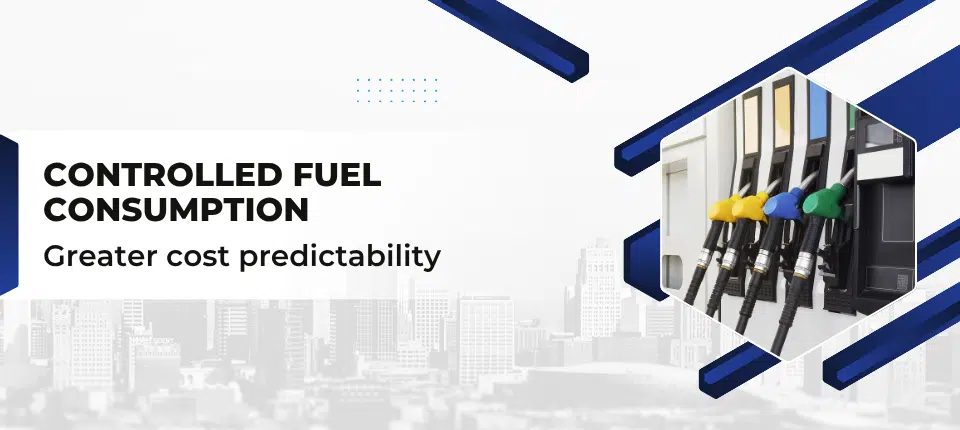
In this context, controlling fuel consumption has become one of the most effective ways for companies to protect their operating costs, regardless of how fuel excise duty evolves.
Why has fuel excise duty increased, and what is its impact?
Starting in July, fiscal measures introduced by the Romanian authorities resulted in another increase in fuel prices. The temporary cap on fuel-related charges remained in force until 30 June 2026 and was not extended. The higher fuel excise duty coincided with continued volatility in the international oil market. Here, geopolitical developments and changing crude oil prices continue to influence supply costs.
According to statistics available on PretCarburant.ro, Romania has recorded a noticeable increase in the average price of both diesel and petrol. For companies consuming thousands of litres of fuel every month, the financial impact is substantial.
Government representatives have also explained that fuel prices are influenced not only by fiscal measures but also by international market dynamics, where petroleum product prices fluctuate continuously.
Could the impact of fuel excise duty decrease?
In recent weeks, several positive signals have emerged.
According to information published by Flote Auto, Prime Minister Ilie Bolojan stated that fuel prices could gradually return to levels seen before the recent market volatility by the end of July, as distributors begin selling fuel purchased at lower prices.
At the same time, another analysis published by Flote Auto indicates that the Romanian Government is closely monitoring market developments and does not rule out legislative intervention if the expected reductions fail to reach consumers.
Experts quoted by the same publication also point to international oil market trends that could support lower fuel prices in the coming weeks. However, they warn that this favourable situation may only be temporary, as geopolitical or economic developments could quickly reverse the trend.
For transport companies, the conclusion is clear: the evolution of fuel excise duty and pump prices remains difficult to predict. Therefore, making cost optimisation strategies based on controllable factors more important than ever.
DieselIndex – a new tool for monitoring diesel prices
An important development for the transport industry is the launch of DieselIndex by the National Union of Road Hauliers from Romania (UNTRR).
According to Flote Auto, the platform provides weekly average diesel prices in Romania and across Europe, using official data published by the European Commission.
DieselIndex allows transport companies to compare fuel prices between countries and plan refuelling more efficiently. For international carriers, this information supports better route planning and cost optimisation. This is crucial in a market where fuel excise duty affects European countries differently.
How does fuel excise duty affect transport companies?
Fuel is one of the largest operating expenses in road transport, often accounting for 30–40% of total fleet operating costs.
Even a relatively small increase in fuel prices can have a significant financial impact.
For example, a light commercial vehicle consuming around 2,000 litres of diesel per month may generate hundreds of additional euros in annual fuel costs. Across fleets of dozens or hundreds of vehicles, the overall impact can reach hundreds of thousands of euros each year.
However, fuel excise duty is not the only factor influencing fleet expenses.
Many companies also face increased costs due to:
– excessive engine idling;
– inefficient driving behaviour;
– poorly optimised routes;
– uncontrolled refuelling;
– discrepancies between estimated and actual fuel consumption;
– vehicle use outside authorised working hours.
These losses can only be identified and reduced through continuous monitoring.
Controlling fuel consumption is the most effective way to reduce the impact of fuel excise duty
Companies cannot control fuel excise duty or fluctuations in the global oil market.
What they can control is how every litre of fuel is used.
This is why an increasing number of businesses are investing in digital fleet management solutions. They provide full visibility into fuel consumption and help identify inefficiencies.
Continuous fuel monitoring makes it possible to identify:
– vehicles consuming above the fleet average;
– excessive engine idling;
– routes generating unnecessary fuel consumption;
– refuelling events and possible fuel losses;
– driving behaviour affecting fuel efficiency;
– differences between theoretical and actual fuel consumption.
At a time when fuel excise duty continues to increase operating costs, this information has become essential for fleet managers.
How the AROBS TrackGPS Fuel Consumption solution helps
The AROBS TrackGPS Fuel Consumption solution gives companies complete control over how fuel is used across their fleets.
By combining GPS data with information collected from the vehicle’s CAN bus or fuel level sensors, the platform provides fleet managers with an accurate picture of actual fuel consumption for every vehicle.
Key features include:
– real-time fuel consumption monitoring;
– comparison of fuel consumption between drivers and similar vehicles;
– idling detection;
– monitoring of refuelling events and possible fuel losses;
– route-based fuel consumption analysis;
– detailed fuel consumption reports;
– rapid identification of vehicles generating above-average fuel costs.
The platform enables data-driven decision-making and helps companies reduce unnecessary fuel consumption while improving operational efficiency.
As fuel excise duty continues to affect operating costs, having complete control over every litre of fuel becomes a valuable competitive advantage.
Accurate data leads to real savings
One of the biggest challenges for fleet managers is the lack of visibility into actual fuel consumption.
Without reliable data, it is difficult to determine whether increased fuel usage is caused by traffic conditions, driving style, technical issues, or inefficient vehicle utilisation.
Using the insights provided by the platform, companies can implement practical measures such as route optimisation, driver coaching, reduced idling, and preventive maintenance.
The result is improved fuel efficiency and a significant reduction in the financial impact of fuel excise duty.
Higher fuel excise duty and continued volatility in the global oil market demonstrate that fuel prices will remain a major challenge. Although fuel prices may stabilise in the coming months, companies cannot build long-term business strategies based solely on market expectations.
Instead, they can focus on what they are able to control: fuel consumption.
With the AROBS TrackGPS Fuel Consumption solution, fleet managers gain complete visibility into fuel consumption, refuelling activity, and vehicle performance. This enables them to identify optimisation opportunities and reduce operating costs.
In an environment where fuel excise duty continues to affect transport companies’ profitability, investing in an intelligent fuel monitoring solution is one of the most effective ways to turn operational data into measurable savings and maintain a competitive advantage.
Contact us now to find out how you can reduce fuel costs and improve fleet efficiency!